There is no single guaranteed lifespan
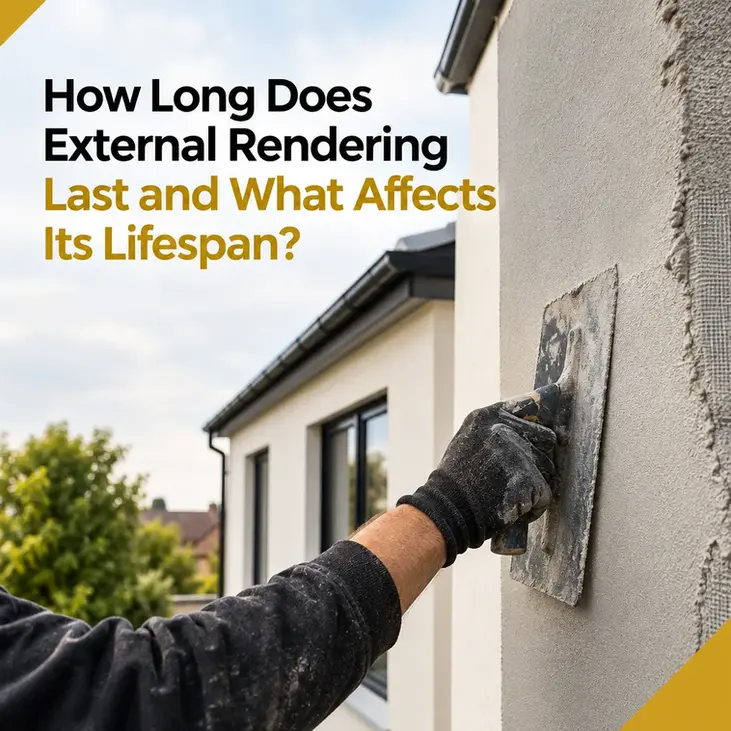
External rendering can provide many years of service, but its lifespan depends on the complete system, substrate condition, detailing, workmanship and exposure. Broad lifespan estimates are not warranties and cannot replace an assessment of the property.
Modern silicone, mineral monocouche, traditional sand-and-cement and heritage lime renders have different strengths and maintenance needs. Choosing a compatible system for the wall is essential.
Preparation and detailing matter
Unsound coatings, loose masonry, cracks and persistent water ingress must be addressed before new render is applied. Proper beads, basecoats, joint treatment, fixings where specified and protection during curing all influence performance.
Poorly designed window reveals, roof junctions, plinth details or drainage can permit moisture into a wall even where the main rendered surface looks sound.
Maintaining rendered walls
Inspect external walls periodically, particularly after severe weather. Keep gutters and downpipes clear and investigate cracks, staining, hollow areas or debonding before damage spreads.
Clean and repair finishes in line with manufacturer guidance. If substantial areas have failed, a survey can establish whether local repairs or a more extensive refurbishment is appropriate.
Every property is different. Render, plastering and insulation specifications must be chosen to suit the building and the manufacturer's installation guidance. For a quotation, send the property location, approximate dimensions and photographs.
Explore Rendafacade services